

Across the workplaces I support, two patterns keep showing up.
Let me say this first. I’m a fan of AI. I’ve trained in it. I use it every day. It gives me back hours. Most of the people I know say the same. AI in the workplace is an extraordinary resource, and we are all benefiting from it. It’s making us all look smarter, and who doesn’t want that?
But there’s a shadow story unfolding alongside the productivity gains. It lurks in emails, strained working relationships, and in Fair Work claims. And it’s stretching the people who are already the most stretched: managers, HR and business owners.
Pattern 1: The AI-Written Email That Didn’t Sound Like Them
Picture two senior managers who’ve worked well together for years. One gives the other a project update, ahead of the agreed date, thinking they’re doing well.
A few days later, an email arrives. It’s very long. It looks polished, but as the receiver reads it, his gut starts to churn. It questions his transparency, quotes project details that don’t quite make sense, asks for information that’s already been shared and closes with some sharp unsolicited advice on what he should be doing differently.
“Where did that come from?” he thinks
Here’s the twist. The sender had good intentions. She wanted to be clear and professional, so she asked AI to help. What arrived on the other side read like an accusation. The relationship cooled significantly.
This is not an AI problem. It is a human one.
AI doesn’t know the history of a relationship. It doesn’t know how much one party has helped the other, the shared goodwill that’s been built over years. Language that doesn’t align with the relationship carries authority that isn’t appropriate.
Polished text and a few fancy terms are not the same as a genuine interaction. And it’s generating a lot of destructive conflict and clean-up work.
Pattern 2: When AI Becomes a Weapon in Workplace Disputes
The second pattern is incredibly concerning. In my client work this year, I’ve supported numerous matters where AI has been used to build a case against an employer. The correspondence is lengthy, exaggerated, laced with legal jargon and completely out of proportion to the original issue. What once took a couple of rounds of correspondence to resolve is now taking over a dozen.
If you’ve been on the receiving end, you’ll recognise it:
- The multi page email citing four pieces of legislation. This is off, because historically, this person never wrote more than half a page.
- The lengthy list of questions, most out of context, each demanding a written response.
- The rebuttal to the rebuttal to the rebuttal.
The cost is high. Matters handled in-house detract from core business activities. Worse still, matters that need legal support have far-reaching repercussions such as spiralling costs and lost business productivity. And while it’s all being worked through, customers vote with their feet.
Then there’s the human cost. There’s a growing sense of fatigue, and at times hopelessness, from managers, HR and business owners.
The Fair Work Commission Numbers Tell the Same Story
This isn’t just something I’m seeing. The Fair Work Commission is seeing it too.
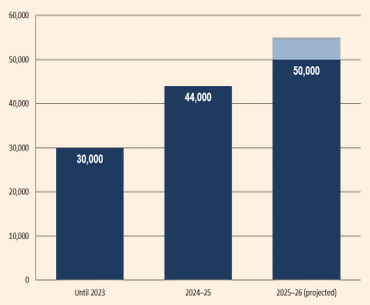
I first wrote about the early warning signs in Rising Fair Work Commission claims and AI risk: why manager training is critical for employers. Since then, the numbers have continued to climb. Looking back, until around 2023, the Fair Work Commission typically dealt with a little over 30,000 lodgements a year. By 2024–25, that had risen to 44,075 lodgments, and in 2025–26 it exceeded 53,000.
The Commission’s President, Justice Adam Hatcher, has said its total workload has grown by more than 70 per cent in three years. Importantly, he has attributed that growth principally to the increasing use of AI tools by potential litigants.
In the first half of 2025–26, compared with the average for the same period over the previous three years:
- Unfair dismissal claims grew by 41%.
- General protections dismissal claims grew by 62%.
- Other general protections disputes grew by 135%.
A general protections claim alleges that an employer took action against a worker because they exercised a workplace right, such as making a complaint, or because of a protected attribute, such as disability, gender, marital status or carer’s responsibilities. Don’t get me wrong, there are some situations where these claims are valid and need attention. But the screaming growth in conflicts and claims has arrived alongside AI, and the Commission itself has made that link.
From 20 October 2026, anyone using AI to prepare a document for a Commission case will need to disclose it and confirm it’s accurate. But that doesn’t undo the fatigue or cost of responding.
One recent bullying matter makes the point beautifully. The Commissioner found the worker had been bullied, and also that the worker’s own AI-assisted emails were lengthy, repetitive and often accusatory. The workplace had stopped engaging, so the genuine issues never got a proper hearing. The Commission mandated that all future communication between the parties must be accurate and respectful, with no AI used to prepare it.
What My Coaching Network Told Me About AI
I recently ran a session with my executive coaching network to explore this dilemma. The themes from our discussion were clear. We agreed on how much AI helps us. We also agreed we need to help people put better guardrails around how they use it, so it protects relationships rather than eroding them.
This is where a coach adds enormous value. They kindly hold up a mirror so you can see your impact. They ask you questions you’re unlikely to consider on your own. They help you be the best version of you.
Making Workplace Communication Human Again
I don’t believe the answer is to stop using AI. There are extraordinary benefits to using AI. The answer to this dilemma is recognising when a message needs deeper human input and care.
There are two ways to communicate at work now. Ghostwritten (AI) communication and real communication. One protects the position of “I’m always right”. The other protects the relationship and focuses on ”getting it right”. For this reason, I’ve created a Communication Framework, a practical way for managers, HR and business owners to communicate and respond in a way that is relational, easy and human. It’s especially useful in the moment that matters most: when you’re stretched for time, and the email in front of you makes you want to retaliate.
If this is resonating with you, reach out here and we’ll partner so your communication, or that of your team, becomes a competitive advantage rather than a disadvantage
When your colleagues read your next difficult email, will they hear jargon and become frustrated, or will they see a way to resolve it?